Unlocking "Super Ager" Strategies for Prolonged Health and Lifespan
Reprogrammed Supercentenarian Cells
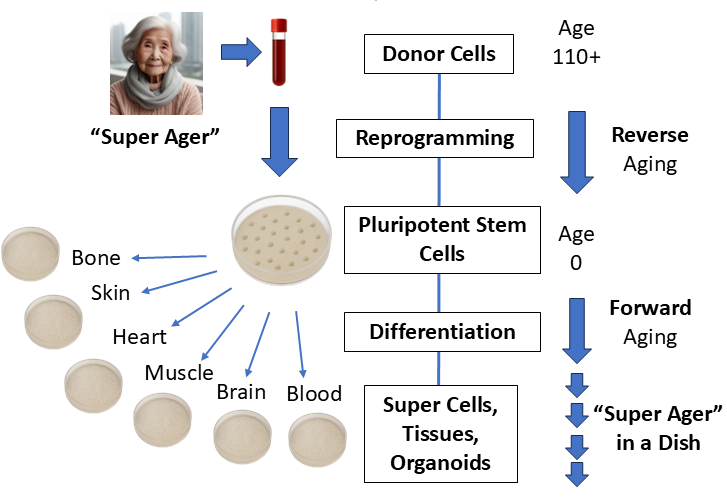
We make pluripotent stem cells from supercentenarian donor cells. These cells can become any cell type and they retain their slow aging qualities. Therefore we can use them to discover the molecular pathways that result in slow aging, disease resistance and resilience.
Discovering the Factors that Make "Super Agers" Age More Slowly
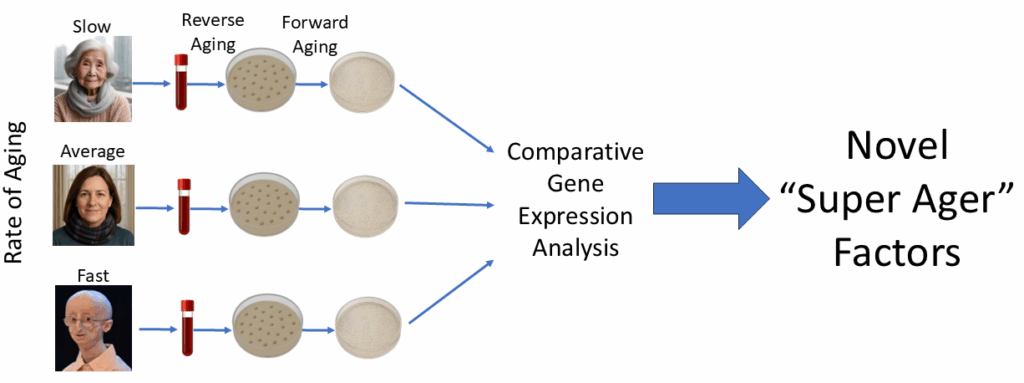
Comparison of Slow, Average, and Fast Aging Cells in a Dish
We can generate any cell type from blood samples and model the way the cells age in a dish. Comparative gene expression and other “omics” analysis are used to discover factors that result in slower aging, disease resistance and resilience.
Using "Super Ager" Factors to Slow the Rate of Aging in Normal Cells
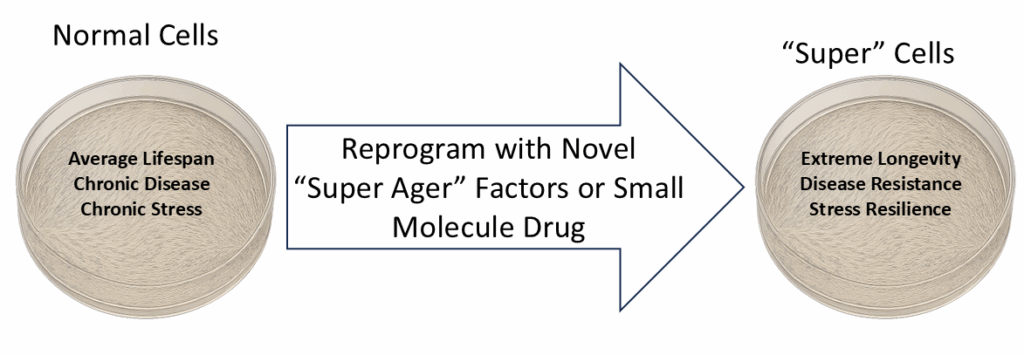
Our platform is used to discover novel factors or small molecule drugs that convert normal cells to “super” slow aging cells that have increased resistance to disease and stress. The therapeutic candidates are then tested in animal models of human age-related disease for their ability to slow down or reverse disease progression. Examples of target indications are osteoporosis, cardiovascular disease, diabetes, and neurological disorders such as Parkinson’s and Alzheimer’s.
Proof of Concept
Age Reversal of 114 year old Supercentenarian Cells
"Super Ager" in a Dish
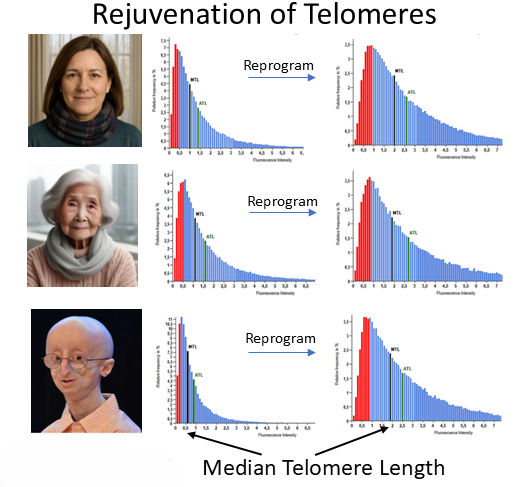
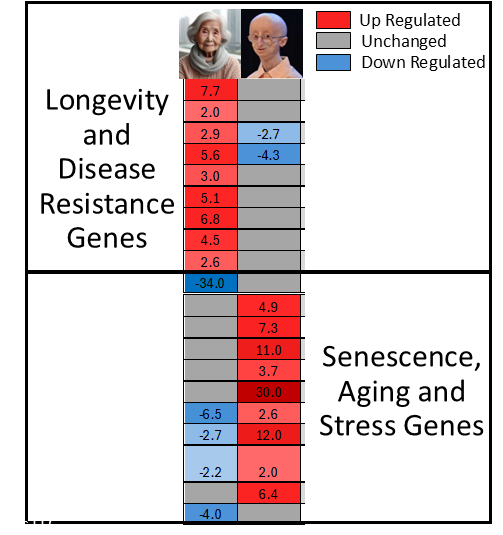
We reprogrammed the blood cells of a 114 year old donor and demonstrated reversal of aging by restoration of telomere length back to the starting length of telomeres at the beginning of life. We converted the blood cells to young mesenchymal stem cells (MSCs) and compared gene expression with MSCs from normal and rapidly aging donors. The results show that the cells we generate reflect the aging rate of the donor enabling our drug discovery platform technology we call “super ager” in a dish.