
News
May 2024 - Further Biotechnologies Issued US Patent for Supercentenarian Technology Platform
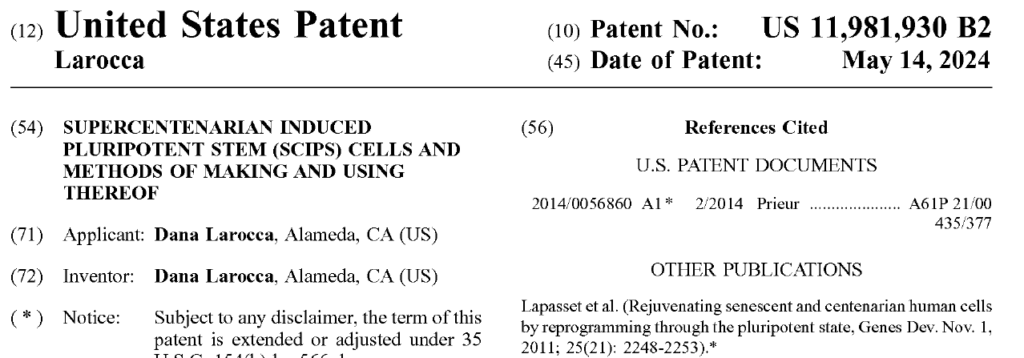
Freedom to Operate for a Unique Biological Resource – The Patent Secures the Exclusive Rights to Create and Use induced Pluripotent Stem Cells from Supercentenarians (age 110+).
Exclusive access to elite biology. The patent locks up methods for deriving and exploiting iPSC lines from super-centenarian donors whose cells appear intrinsically resistant to various age related diseases including cancer, osteoporosis, neurodegeneration and cardiovascular decline. The patent blocks competitors from generating identical cellular platforms, giving the holder a singular window into extreme healthy aging.
First-in-class discovery engine. Because the claims cover both the reprogrammed cells and their mesenchymal or other differentiated progeny, Further Biotechnologies can deploy a proprietary battery of “disease-proof” human models for high-throughput screening, target validation and biomarker development. Drugs or biologics identified in these models stand a better chance of mimicking super-centenarian defense mechanisms, creating a pipeline of differentiated candidates for osteoporosis, Alzheimer’s, sarcopenia and beyond.
Licensing and partnership leverage. This foundational patent family provides Further Bio with the ability to license the IP or collaborate with industrial and academic groups seeking to leverage supercentenarian biology, thus generating non-dilutive revenue and strategic alliances while preserving core control.
Defensive moat and patent stacking. Owning the foundational rights allows Further Biotechnologies to file follow-on patents—for engineered derivatives, secretome/exosome therapies and pathway-specific small molecules—without freedom-to-operate risk. Further Bio intends to build a layered estate that can last well beyond the initial term.
Together, these advantages create a durable competitive moat, accelerate therapeutic discovery, and open multiple monetization channels, all while advancing the mission of extending human healthspan.
March 2020 - First Supercentenarian Derived
Stem Cells Created.
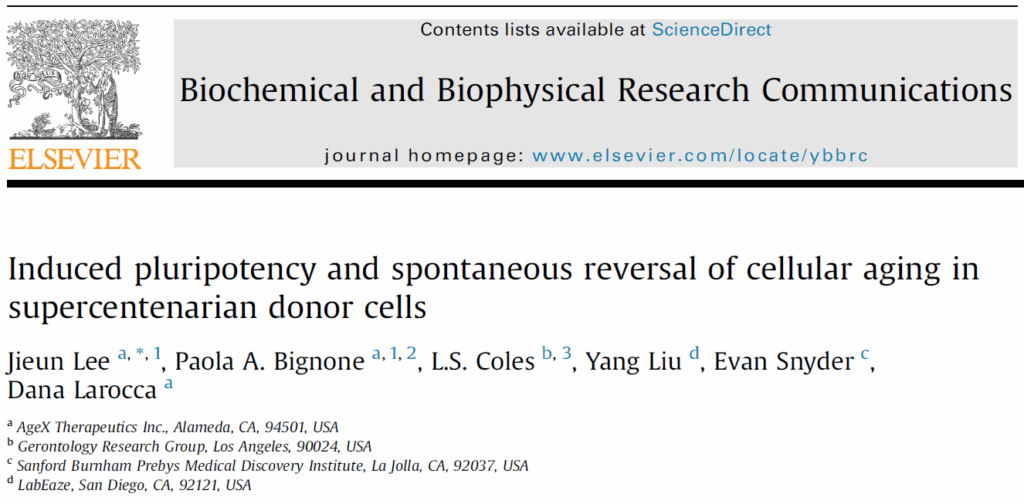
Scientists at Sanford Burnham Prebys and AgeX Therapeutics have turned blood cells from a 114-year-old supercentenarian into induced pluripotent stem cells (iPSCs) —the first time tissue this old has been fully “reset.” The team performed the same feat with cells from a healthy 43-year-old and an 8-year-old progeria patient, then converted all iPSCs into mesenchymal stem cells. Remarkably, the supercentenarian cells reprogrammed as readily as the younger samples and even had their telomeres restored to youthful length.
The advance matters because supercentenarians are biologically extraordinary even relative to centenarians: while many centenarians still develop late-life illnesses, those who cross 110 appear broadly resistant to age related illnesses such as Alzheimer’s, cancer, osteoporosis and heart disease. Having a renewable source of their iPSCs creates a unique platform to identify the genes and molecular programs that confer this extreme, disease-free longevity. Insights gleaned could guide drugs that emulate supercentenarian defenses or block pathways that accelerate aging in the rest of us—offering the most direct route yet to extending both human lifespan and healthspan.